
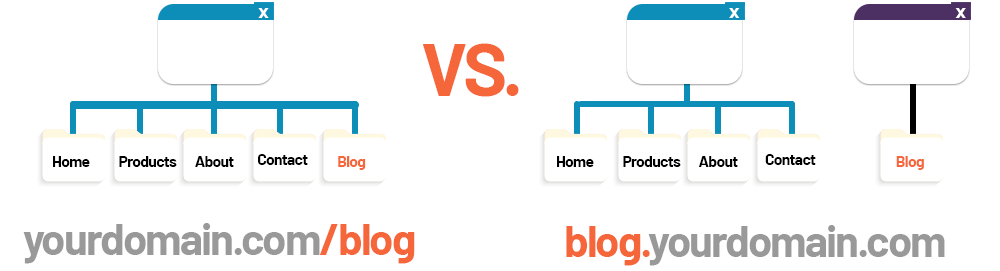
Subdomains have been around since the early days of the internet, but their role in SEO, branding, and site structure has evolved over time. Many businesses still wonder whether using a subdomain is a good choice compared to keeping everything under a single domain with subfolders. Let’s break down the facts as they stand today.
What is a subdomain?
A subdomain is essentially an extension of your main domain, often used to separate specific sections of a website.
- Main domain example:
www.hosting-marketers.com - Subdomain example:
special.hosting-marketers.com
Unlike subfolders (e.g., www.hostingmarketers.com/special/), subdomains act as their own entity with a distinct URL.
Benefits of subdomains
- Organizational clarity
Subdomains help separate different parts of a business, such as blogs, stores, support centers, or regional sites. For example:blog.company.comsupport.company.com
- Branding flexibility
They can give unique branding to a service or product while still being tied to the main domain. - Independent SEO potential
Search engines treat subdomains as separate websites. This means each one can rank on its own, which may be useful if you’re targeting very different keywords or audiences. - Technical advantages
Subdomains allow you to use different hosting environments, software, or even servers while keeping everything connected to your brand.
Drawbacks of subdomains
- SEO challenges
Since Google treats subdomains as separate properties, authority and backlinks are not automatically shared with the main domain. This means you may need extra effort to build ranking for each subdomain. - User perception
Some users find subdomains less professional-looking than a single, unified site structure. - Complexity
Managing multiple subdomains requires more setup, maintenance, and tracking. Analytics, cookies, and SEO campaigns may need to be configured separately. - Risk of penalties
If your main domain is penalized by search engines, subdomains can be affected too. This is less common than it used to be but still worth considering.
Subdomains vs. subfolders: which should you choose?
- Use subfolders if your content is closely related and you want to consolidate SEO authority under one domain.
- Use subdomains if you’re targeting very different audiences, need separate technical environments, or want independent SEO strategies.
Final thoughts
There’s nothing inherently wrong with using subdomains in 2025. The key is to decide whether you want them to function as independent entities (with separate SEO strategies) or whether you’d benefit more from consolidating everything under your main domain.
If you’re running a business site, subdomains can be a powerful tool when used strategically — but they’re not a shortcut for SEO.